Although educators are often frightened by school district legal staff, the law provides teachers with pretty broad exceptions when it comes to using copyrighted material under fair use. When in doubt, use public domain materials or consult a lawyer!
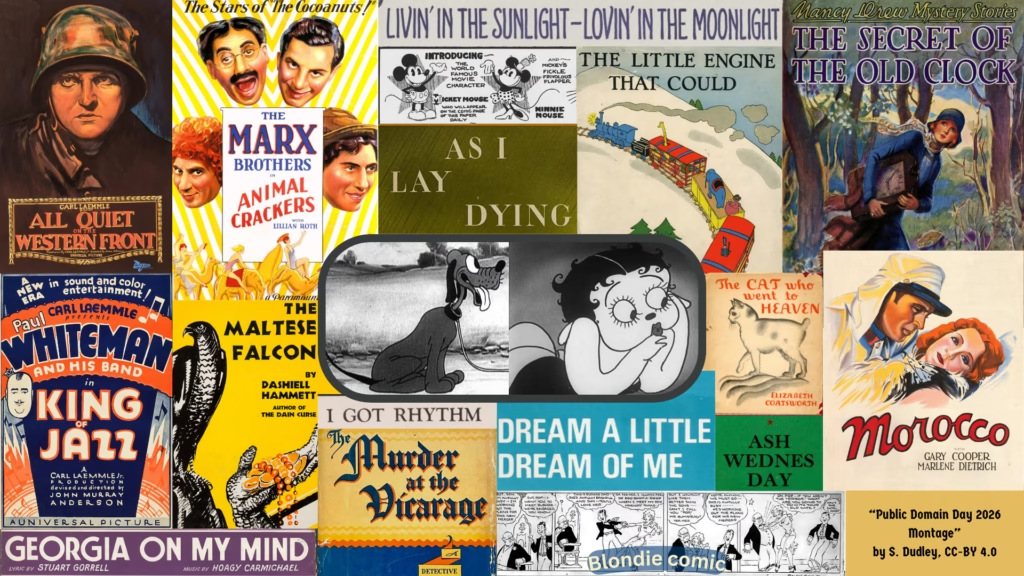
Having worked in either the riveting nexus of media and education my whole life—like the vitamin D-deficient, “no thanks, I go to bed at 9:30. Have fun though!”—you can imagine I’m a fun person. Accordingly, copyright law holds a special place in my heart. Although I’m a bit late to the party on January 1, 2026, Public Domain Day is the day where one more year’s worth of published, copyrighted work enters the public domain, in this case, 1930!1
As confusing as it can seem, it’s portrayed to be such a behemoth of danger that people often err on the side of playing-it-safe, even though they are likely fully in the right with their use case.2
While I naturally support the idea behind copyright, I believe that it’s gone too far in many ways, often serving to prevent creativity and innovation rather than encouraging it, which was the whole point of copyright in the first place.
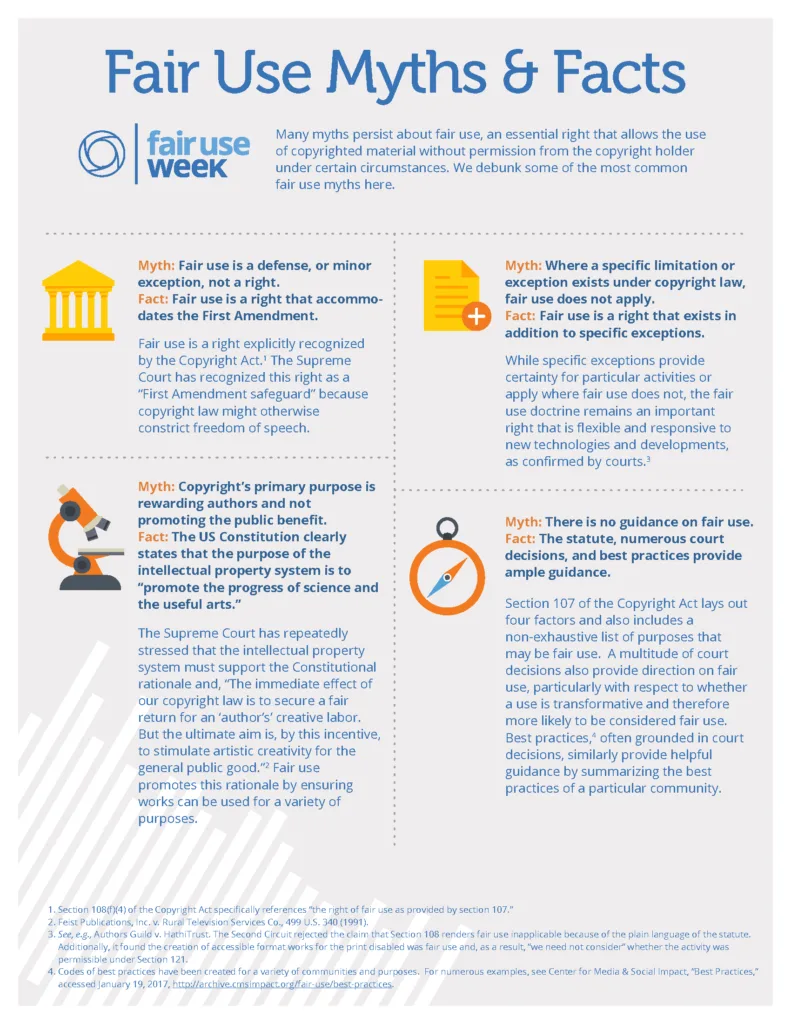
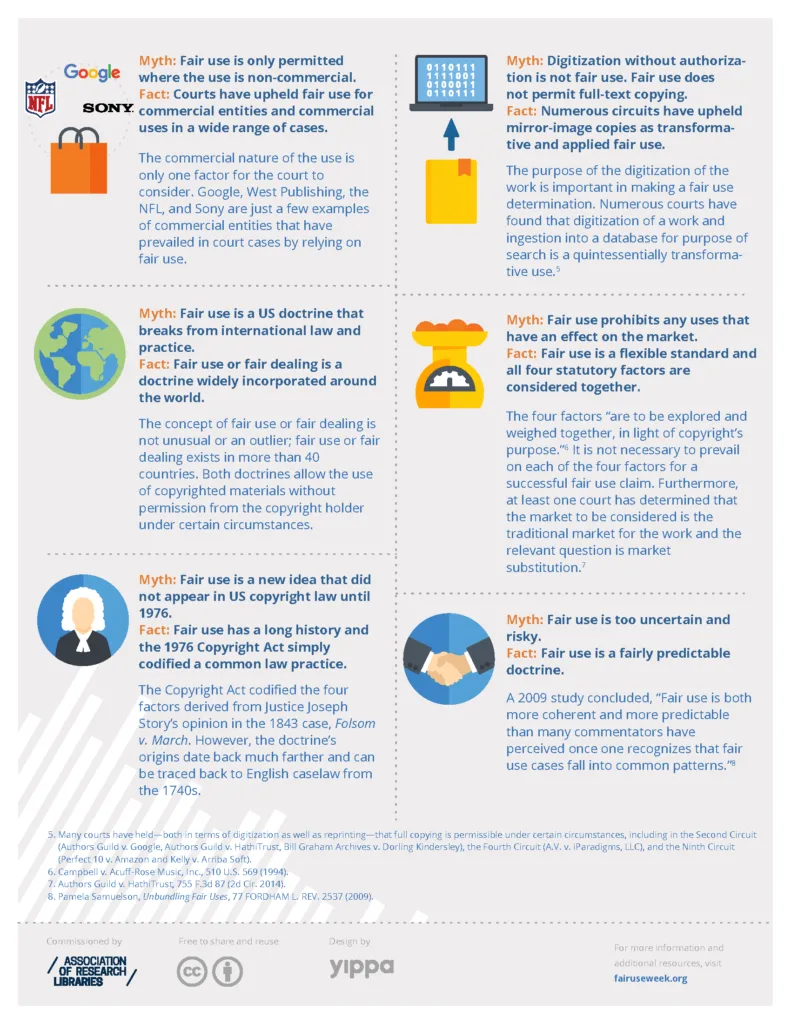
Fair Use Myth and Facts (Courtesy the Association of Research Libraries).
Copyright gives the person who created a product of the human mind and spirit (such as a painting, song, dance, novel, poem, short story, computer program, app, website, etc.) the sole legal right to produce copies of it. As a rare instance in English where the word is exactly what it says, copyright is just that: the right to copy. Profound.
One feature of common law (the shared legal tradition of the English-speaking world), often misunderstood or even not widely known about, is the idea of “fair use.”
Now, please note, I am not an attorney nor a lawyer and this is not legal advice under any circumstances. In the words of the immortal Taylor Swift, “But having been a publisher and head of a software company, I believe my understanding of that law is pretty grounded. And besides, the law is pretty clear on this issue.
Fair Use
—or—
how I learned to stop worrying too much about copyright and just teach kids how to read
Fair use is a legal doctrine that allows limited use of copyrighted works without permission to support freedom of expression. United States Code (17 U.S.C. §107) says teachers are allowed to copy for classroom use (subject to some limitations, of course), saying:
“Notwithstanding the provisions of sections 106 and 106A, the fair use of a copyrighted work, including such use by reproduction in copies or phonorecords or by any other means specified by that section, for purposes such as criticism, comment, news reporting, teaching (including multiple copies for classroom use), scholarship, or research, is not an infringement of copyright.”
When interpreting the law, courts decide fair use case by case using four factors.
- The purpose and character of the use: nonprofit, educational, and especially “transformative” uses (those that add new meaning or serve a different purpose) are more likely to be fair, but commercial uses are not automatically disqualified.
- The nature of the original work: using factual or published material is more likely to be fair than using highly creative or unpublished works.
- The amount and importance of what is used: smaller portions favor fair use, but even small excerpts can be unfair if they are the “heart” of the work, and in some situations using the whole work can still be fair.
- The effect on the market: if the use substitutes for the original or harms its current or future market, fair use is less likely.
So, can you use it? Probably.
But, just as in life, it depends.
Other factors can matter depending on the situation, and there are no fixed rules about how much can be copied. Each decision depends on specific facts and balancing all factors together.
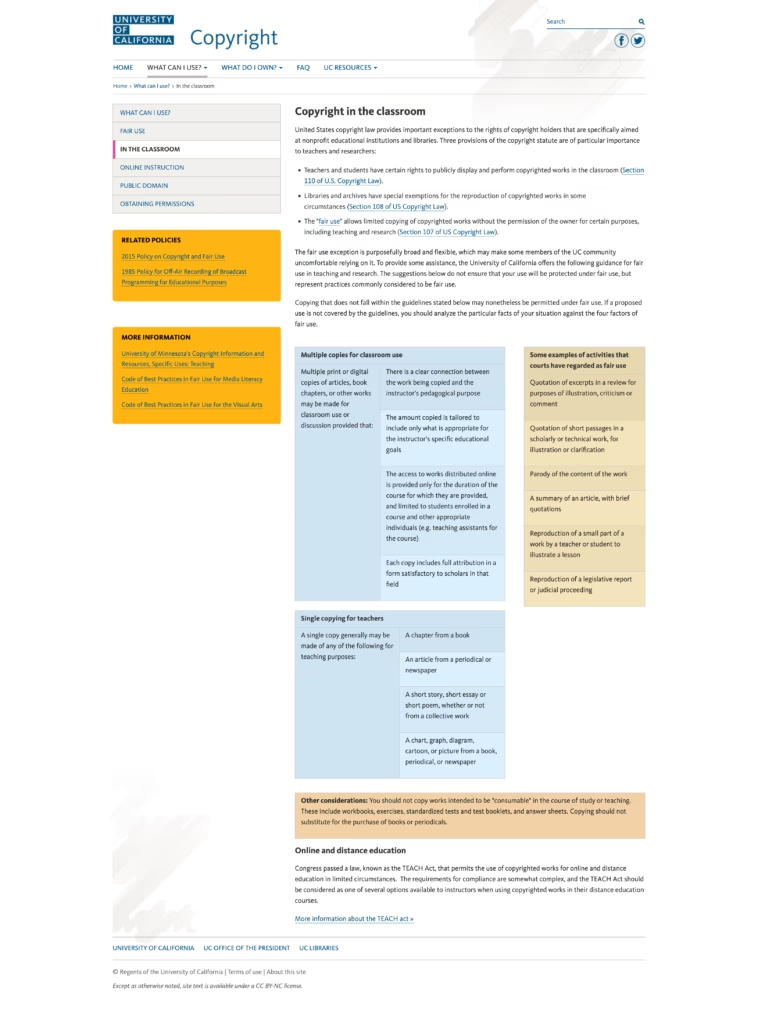
For example, a teacher who makes a class set of copies of a single poem out of a poetry anthology book can do so without permission or paying an extra fee, especially if that teacher or school isn’t making money from teaching the class.
Case in point, as a teacher I have routinely incorporated supplementary materials with the approval of my school administration that are copyrighted. But, because I teach in a public school system, which, as a government institution is a nonprofit, and because it is a very limited use case, a publisher could not argue that my copies stopped those students from otherwise buying the book. The students would not have bought that book.
The publisher in no way lost money. In fact, the number of times that students have ended up buying the book in which whatever-it-was appeared, merely because they liked it so much, would suggest that I’m actually doing the publishers a favor. So, you’re welcome. Simon and Schuster is welcome to send me a check, anytime—thank you.
Educators, especially, worry about their use being “copyright infringement” far too much (though, sometimes it is!), falling prey to the fear mongering rampant among their district’s legal department and the scary warnings they remember at the beginning of DVD/VHS tapes in the 90s.
After all, when was the last time you heard about an science teacher going to jail using an excerpt from a National Geographic magazine on a Google Slide or an English teacher being sued by a publisher for making 30 copies of a page from an anthology for annotation in class? Nope.
When in doubt, ask a lawyer. Or, check out these resources from the United States Copyright office on fair use. Also, the University of California has this amazing guide to copyright for educators. I am slightly outside the bounds of their license, which says that the text of the site is available under the Creative Commons BY-NC license, I am linking back as well and encourage everyone to visit the site for more information and to fully understand the issue. I’m also grateful that UC makes this information available in such an easy-to-understand format.
The great thing about public domain day, the first day of the year every year celebrating the addition of one more year’s worth of work being added to the public domain
notes
- And 1925 for music in published, written form. See Jennifer Jenkins and James Boyle, “Public Domain Day 2026,” School of Law, Duke University (2026), and more broadly, Duke’s Center for the Study of the Public Domain. ↩︎
- It is important to note that I am not now , nor have I ever been, a lawyer, a licensed attorney, or anything approaching being admitted to a legal bar in any state. My devastatingly witty prose and sharp logic may make me seem lawyer-like, but make no mistake that none of this is legal advice. To make that clearer, this is not legal advice. Anything you do as a result or not of having read this article or not is your own decision, entirely within your locus of control and completely outside of mine, and you assure everyone (do you swear to tell the whole truth? so help you?) present here today that you’re not a lunatic and would take something you read online and act in a way that would sustantively jeopardize your well-being to such an extent that you would sue me? How could you! That’s absurd, and you’re not a particularly goofy goober, at least no more than I. Which means you wouldn’t do anything like that. Good job. Proud of you. ↩︎