
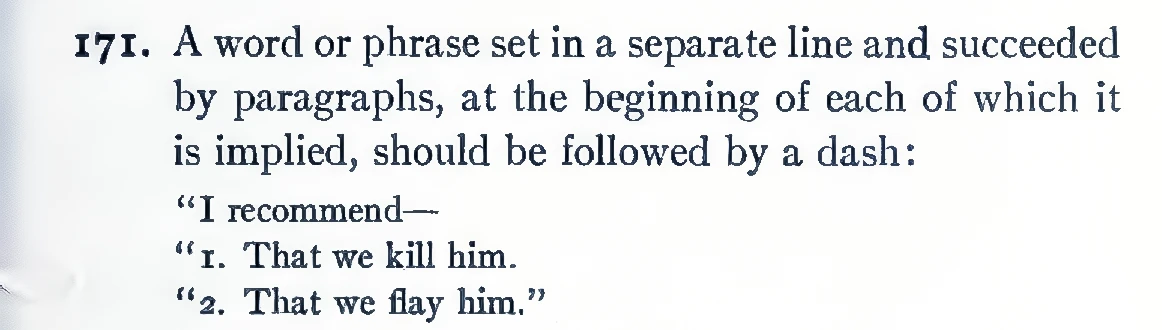
What is now one of the harbingers of AI-written slop is more than just punctuation to me. That’s a sad thought. Slightly pathetic.
Now, don’t get me wrong. I love generative AI. I mean, how can I not? I tried to teach gen AI’s grandfather how to tell if someone is telling a joke on Twitter or not. So successful, by the way. Like, wow.
But, hey, it’s true. But when you’re a kid raised in a working-class household in Vegas — by an English/Art teacher mother and a college dropout, local dive bartender father — a grandmother who was a chemist and escaped ethnic cleansing and fascism but was still bitter she had to give up her money and servants to get here.
Mind you, I began curating both my love of the em-dash and an ever-increasing pretentiousness in an overpriced Moleskine leather notepad while smoking Parliament cigarettes in the rain outside the library coffee shop in college. I would occasionally take the nearly thirty-dollar notebook out with all the verve of an Archimedes, or just a slightly above-average college student with an attitude problem. And I was desperate to feel special. When I suddenly realized no matter how many times I was told I was smart in high school, I wasn’t as smart as a lot of my new peers.
Hence, the em-dash. Why? It sure as heck feels smart. In the Midwestern, middle America, tone-it-down college town, I didn’t want to stand that far out. I mean from all places, one can be from, I was from Vegas. I wanted to seem like I was from anywhere but Vegas.
From where I grew up, from where my dad had died just two weeks before I arrived at college, from where I was embarrassed to call home, the place the em-dash metaphorically and physically distanced me from—Vegas.
Being in such an environment as Vegas for long enough, one will inevitably fall victim to the Too Much/Too Little Effect, sometimes also referred to as the Siegfried, Roy, and Carol Baskin’s Wild Animal Safety Seminar.
The Too Much/Too Little Effect
Too many sequins, vices, and ways to jeopardize one’s bank account and place in whatever afterlife you believe in.
Too little school funding per pupil, quality construction, and water.
Got it? Good.
You see, I spent some summers back east with my grandmother growing up.
In the rest of the country. A little panelling here, a lot of porch swings there, a metric funton of antique stores filled to the brim with things.
In Vegas, everything is way too much.
Most people who’ve been to Vegas, sooner or later, lose their retired aunt Barbara to an age-restricted retirement community in Summerlin or Henderson. Alternatively, perhaps, they themselves have ended up blacked out, broke, hung over, lost, arrested, on a do-not-fly list or no longer speaking to you know who, your former best friend—before Vegas.
I know at least two schoolteachers who have earned the distinction of being on the do-not-fly list of a domestic, discount airline. One, for being so inebriated upon his or her return to Vegas after a vacation and the other for defending the other, who was perturbed upon a disagreeable combination of hallucinogenics, alcohol, and marijuana. Believe you me, I am not one of those two individuals. You can’t get me near an airplane.
Vegas is not for the weak. I’m now proud that I not only survive it, I thrive on it. It’s the radioactive water from the atomic testing, I think.
And even though I feel differently now, well, the em-dash meant more to me than is healthy for a human being. It’s not over the top. It’s not trying too hard like a semicolon. It’s not obnoxious like parentheses. And no one else used it. Or, not many. It made me feel special without being too much.
And besides, em-dashes are amazing.
They don’t really interrupt the flow of reading — resting like pillows on either side of something — for a subordinate clause. They’re also used like a beautiful chaise longue upon which the weary final phrase may rest before it must slog on through the rest of whatever is being said.
I ended up in a fine arts community because of a housing shortage on campus. Most of my new friends were quite pretentious themselves, so I felt the need to even further stand out. The em-dash was falling out of use because no one could figure out how to actually type the damn thing.
I still don’t know how to do it on Windows. No clue! The internet says it’s Unicode + blah blah blah. What the blah does that mean?
No, I found it. It says press “control” then “shift” then the “U” key and then download Ubuntu or something that’s not Windows—or maybe donate it or sell it and buy a Mac instead. Anything else but Microsoft Windows. Personally, I would rather not use an operating system which helps pay for Jeffrey Epstein’s friends (allegedly).
On a Mac it’s a lot easier. Instead of the six keys it takes on Windows, when you only have five fingers on one hand anyway, it’s just three on a Mac: “option” then “shift” and hyphen. And so it goes.
Now, however, along with my love of rambling about nothing in particular—although I’m sure it’s for the best—the use of the em-dash is now relegated to the trenches of AI slop.
If you wouldn’t mind indulging me, I ask you, my beloved reader, to observe a moment of silence for the innocent punctuation who only tried to make the English language slightly more understandable. Thank you.
[So, if you don’t mind, please remain silent for about thirty seconds, thank you. I really do appreciate it. I have no idea if you’re actually being silent right now; but still, I really do thank you, nonetheless. Average reading time would say you’ve complied with my request, if you read in your head. This concludes the moment of silence.]
You didn’t have to do that! I didn’t realize you loved the em-dash as much as I did. I honestly thought no one would have a moment of silence for me like you just did. That was so nice! Golly! Thank you again.
Yes, we will truly miss you, em-dash.
Woe and lamentations—truly.
/
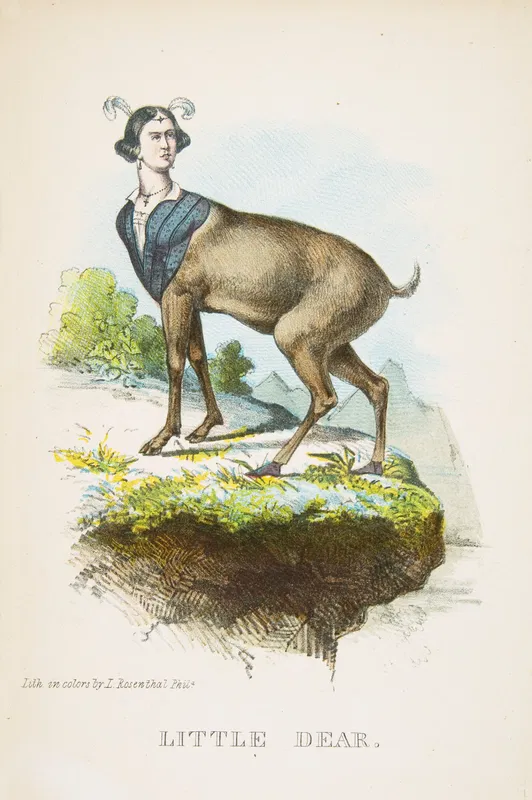
Little Dear
from: The Comic Natural History of the Human Race.
Artist: Henry L. Stephens, 1851.
Color lithography on paper.
This image is in the public domain.
—via The Met, New York.